

Why Reykjavík Has Colorful Houses: History & Best Locations
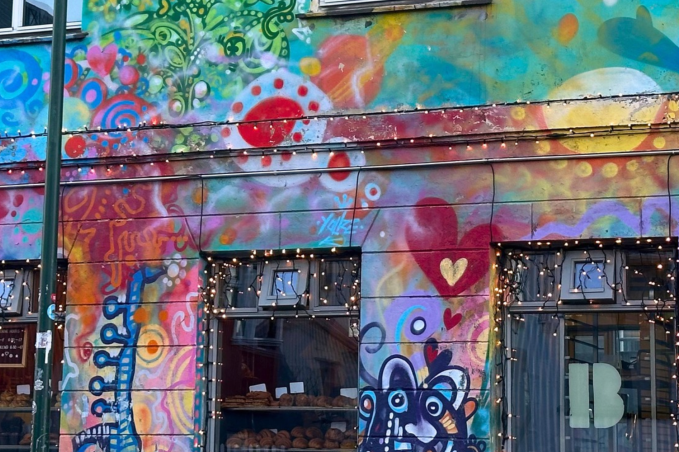
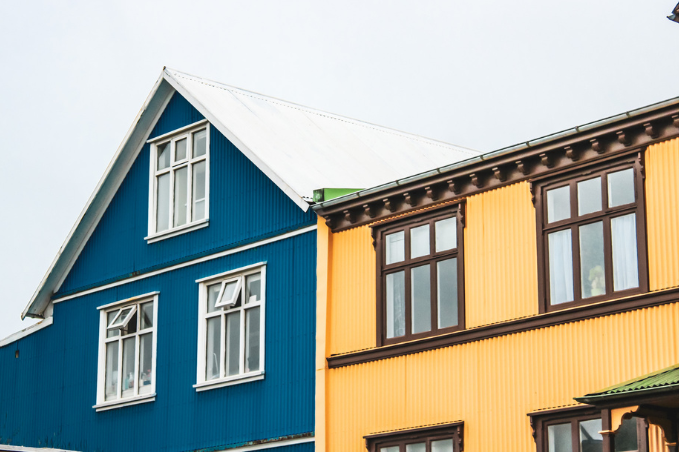
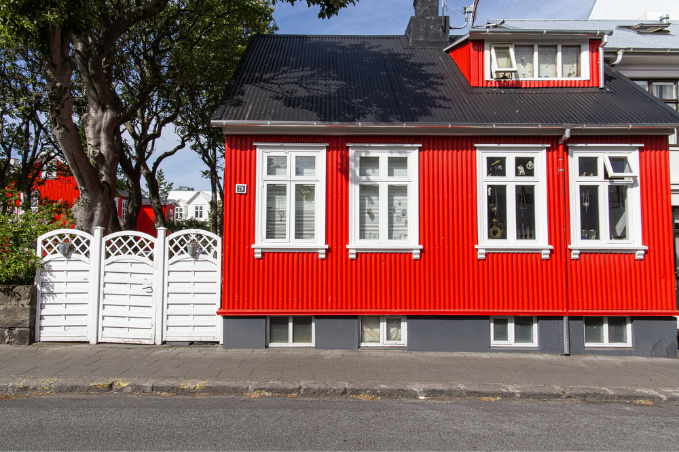
If you’ve ever seen a Reykjavík postcard, you likely noticed a sea of vibrant reds, deep blues, and bright yellows. The colorful houses in Reykjavík have long become a vital part of the city’s identity. Exploring downtown feels like walking through a giant Lego set, where every corner reveals a new shade of the rainbow.
But why did a city known for its moody weather and volcanic landscapes choose such a bold palette? The story is a mix of survival, trade, and a quiet resistance to the grey winter skies.
The History Behind Reykjavík’s Colorful Houses
The story of how Reykjavík, or Iceland in general, became so vibrant begins with a simple lack of natural resources. Historically, Iceland was short on timber due to deforestation, and stone was incredibly labor-intensive to carve. For centuries, the "classic" Icelandic home was a turf house, built into the earth for natural insulation. However, as the city began to modernize in the late 1800s, residents needed more durable materials. Particularly, one that can withstand the salt, wind, and relentless rain of the North Atlantic.
The evolution of the colorful houses in Reykjavík can be traced through these key moments:
- The arrival of bárujárn: In the late 1800s, corrugated iron (known locally as bárujárn) began arriving from England in exchange for Icelandic sheep. It was inexpensive, lightweight, and easy to transport across the rugged Icelandic landscape. It quickly became the material of choice because it was virtually indestructible against the coastal elements.
- A shield against rust: While iron was tough, it had one major enemy: rust. To protect their homes from the salty sea air, residents had to paint the iron cladding. Since raw iron is a perfect canvas for paint, it allowed for much bolder colors than traditional wood or stone.
- The Great Fire of 1915: This disaster was a turning point for the city's architecture. The fire destroyed a large portion of the wooden downtown but notably left metal-clad houses unharmed. In response, the city passed a law requiring all new houses built close together to have corrugated iron walls.
- Maritime leftovers: In the early 20th century, specialized house paint was a rare luxury. Residents often used leftover paint from fishing boat repairs to color their homes. This gave rise to the traditional harbor-inspired palette of deep reds and ocean blues that you still see today.
- Combatting the winter blues: What began as a practical way to prevent corrosion eventually evolved into a cherished cultural tradition. These bright facades provide a much-needed pop of color during the long, dark winter months.
Today, this tradition has merged with a thriving local art scene. Pair these historic, colorful houses of Reykjavík with the city’s creative street art. And you get one of the most visually stunning capitals in the world.
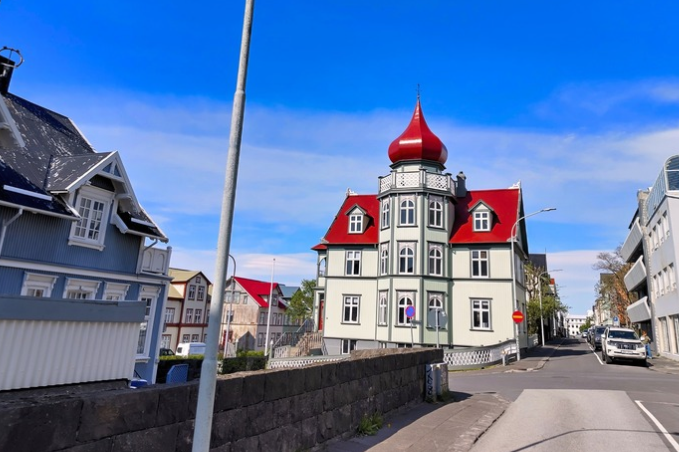
Best Places to See Colorful Houses in Reykjavík
You can spot vibrant homes throughout Iceland’s capital. But some neighborhoods and viewpoints offer especially beautiful views of Reykjavík's colorful houses.
1. Þingholt neighborhood
The historic district of Þingholt is one of the best places to explore traditional Reykjavík architecture. Narrow streets wind between small wooden houses painted in pastel shades. Many homes here date back to the early 20th century and are carefully preserved. Walking through the area feels quiet and residential, even though it sits close to the city center.
The neighborhood is ideal for a relaxed stroll. Look for details such as decorative window frames, small gardens, and classic corrugated-iron walls painted in soft colors.
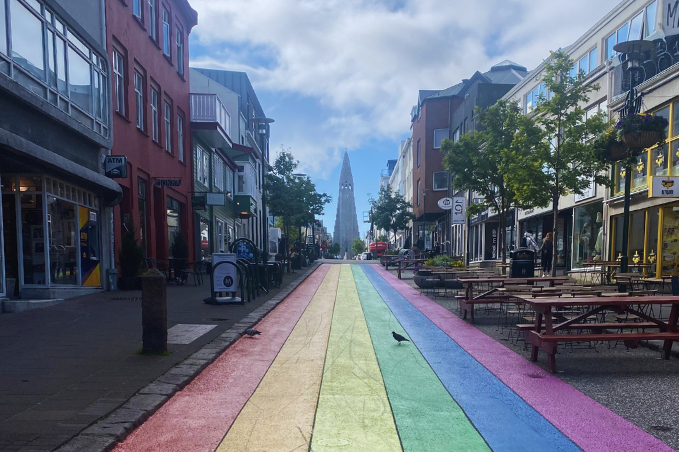
2. Skólavörðustígur rainbow street
Few streets in Reykjavík are as photographed as Skólavörðustígur. This lively road runs uphill toward the famous Hallgrímskirkja Church. Along the way, colorful houses sit beside cafés, boutiques, and small galleries. The street itself features a painted rainbow walkway, which adds even more color to the scene.
This rainbow street is an ideal spot to see the colorful houses in Reykjavík while enjoying local shops and restaurants.
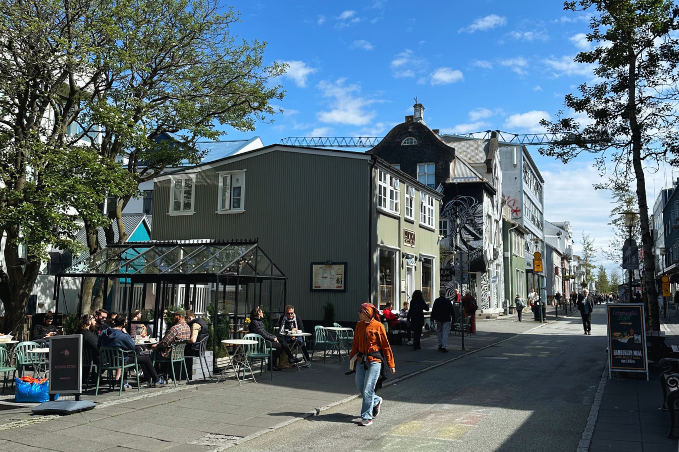
3. Laugavegur main shopping street
The Laugavegur main shopping street is another great place to notice the colorful architecture. It may be known for its boutiques, bars, and restaurants. But many of its surrounding buildings also feature bright façades and traditional corrugated iron walls. This vibrant mix of historic houses and modern storefronts creates a lively urban atmosphere.
If you wander down side streets branching off Laugavegur, you’ll often find quieter residential homes painted in bold colors.
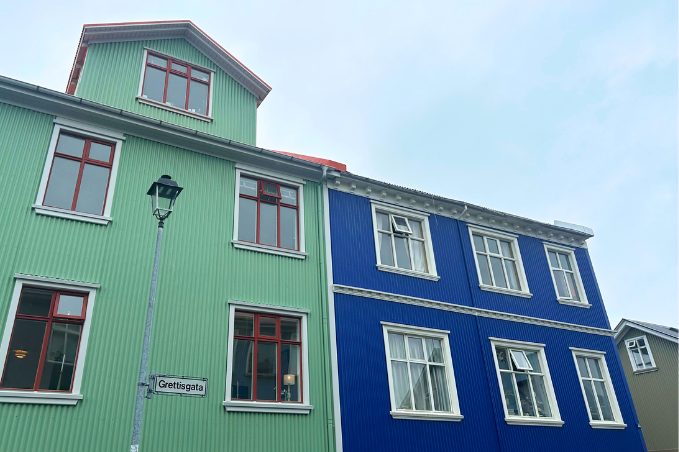
4. Grettisgata and Njálsgata streets
Two quieter streets just off Laugavegur, Grettisgata and Njálsgata, offer a more local view of the colorful houses of Reykjavík.
Here, the houses feel and look more traditional, and the pace is slower. You’ll find charming wooden homes in shades of teal, yellow, and red. Many properties have painted electric boxes and steps leading up from the sidewalk, adding character to the neighborhood.
Since these areas are less busy, they’re also great spots for street photography in Reykjavík.
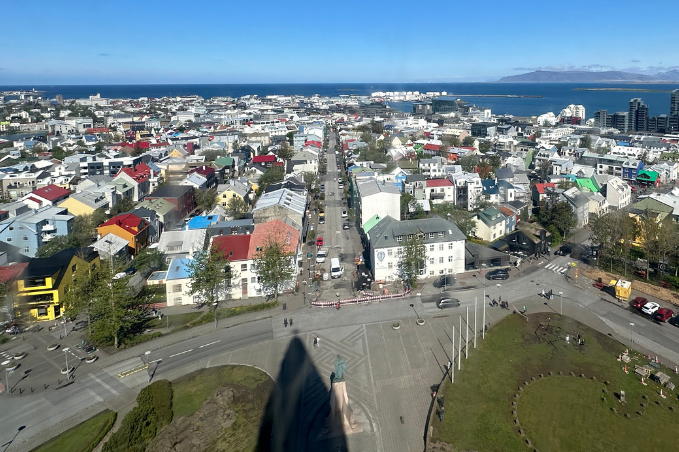
Hallgrímskirkja church tower
For a view from above, head up the church tower of Hallgrímskirkja. From the observation deck, the colorful rooftops of Reykjavík stretch toward the sea. Bright houses cluster together across the hills, creating a patchwork of colors that contrasts with the surrounding mountains and ocean.
This spot offers one of the best panoramic views of the colorful houses in Reykjavík, especially on clear days.
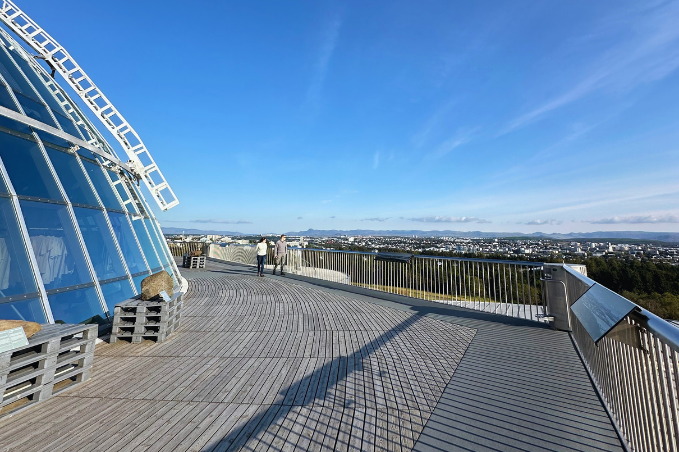
6. Perlan observation deck
Another excellent viewpoint can be found at Perlan. Located on a wooded hill overlooking the city, Perlan provides a 360-degree observation deck. From here, you can see the full layout of Reykjavík, including neighborhoods filled with colorful homes. The elevated perspective makes it easy to appreciate how the city’s vibrant houses stand out against the natural landscape.
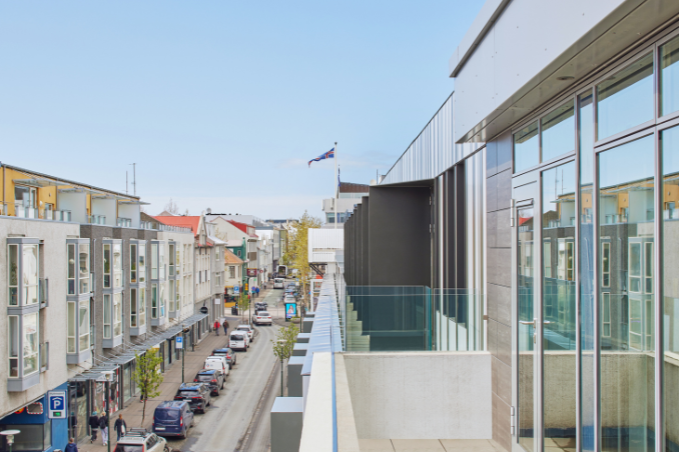
Best Places to Stay Near Reykjavík’s Colorful Houses
Staying near the historic center makes it easy to explore the colorful streets on foot. If you want to be steps away from these photogenic streets, Center Hotels offers several prime locations:
- Þingholt by Center Hotels: A boutique hotel located right in the heart of the historic district. You’ll be surrounded by Reykjavík’s colorful houses and be able to relax at Ísafold Spa or Ísafold Lounge & Bar afterward.
- Center Hotels Klöpp: Situated just off Laugavegur, this hotel is ideal for those who want to explore Reykjavík’s hidden alleyways and colorful nooks.
- Center Hotels Laugavegur: This modern spot puts you directly on the most famous street in Reykjavík. Staying here makes it easy to explore the city’s historic architectural evolution and modern art.
Wander Between the Colorful Houses in Reykjavík
The colorful houses in Reykjavík are one of the city’s most memorable sights. What began as a practical solution for protecting homes from harsh coastal weather eventually became the city’s defining feature.
Today, these vibrant streets add warmth and character to the city. Whether you’re strolling quiet streets or looking out from above, the colorful buildings help make Reykjavík feel welcoming and unique.
Put your camera away for a moment, grab a hot coffee, and simply enjoy the glow of the city’s palette.
FAQs
Where are the colourful houses in Reykjavík?
You can find colorful houses throughout Reykjavík, especially in neighborhoods near the city center. Areas such as Þingholt, Skólavörðustígur, and streets surrounding Laugavegur are well known for their vibrant homes.
What is the famous street in Reykjavík?
Laugavegur is the most famous street in Reykjavík for shopping and nightlife. Meanwhile, Skólavörðustígur is best known for its rainbow-painted pavement.
When is the best time of day to photograph the colorful houses in Reykjavík?
Early morning and late afternoon often provide the best lighting for capturing Reykjavík’s colorful homes. During these hours, the softer sunlight highlights the bright façades and creates warmer tones across the streets.
What colors are traditional Icelandic houses?
Traditional homes in Reykjavík are often painted in shades of red, blue, yellow, and green. These colors originally came from marine paints used for fishing boats and later became part of the city’s architectural identity.
Where can you see colorful rooftops in Reykjavík from above?
For panoramic views of the colorful rooftops, visit the observation deck at Hallgrímskirkja or the viewing platforms at Perlan. Both locations provide excellent perspectives of the city’s vibrant neighborhoods.
Why are Icelandic houses made of corrugated iron?
Corrugated iron became popular in Iceland during the late 19th century because it was affordable, durable, and easier to import. The material also holds paint well, which helped create the colorful houses seen in Reykjavík today.